Why coloring pages still matter
In an era of glowing tablets, paper coloring pages keep doing quietly important work. They build fine motor control, train sustained focus, give kids a low-stakes way to make decisions (which color goes where?), and turn screen-free time into something a child actively chooses instead of merely tolerates. They’re cheap, portable, and almost impossible to use wrong.
Use the categories as a starting point
Every category page on Kid Pages Fun includes a short description, an age suggestion, and a list of typical use cases — everything from “reading-corner activity” to “birthday-party favor.” If you’re planning a unit on the solar system, a holiday party, a vocabulary lesson on farm animals, or a quiet hour at home, the matching category gives you a printable bundle in one click.
Ideas for the classroom
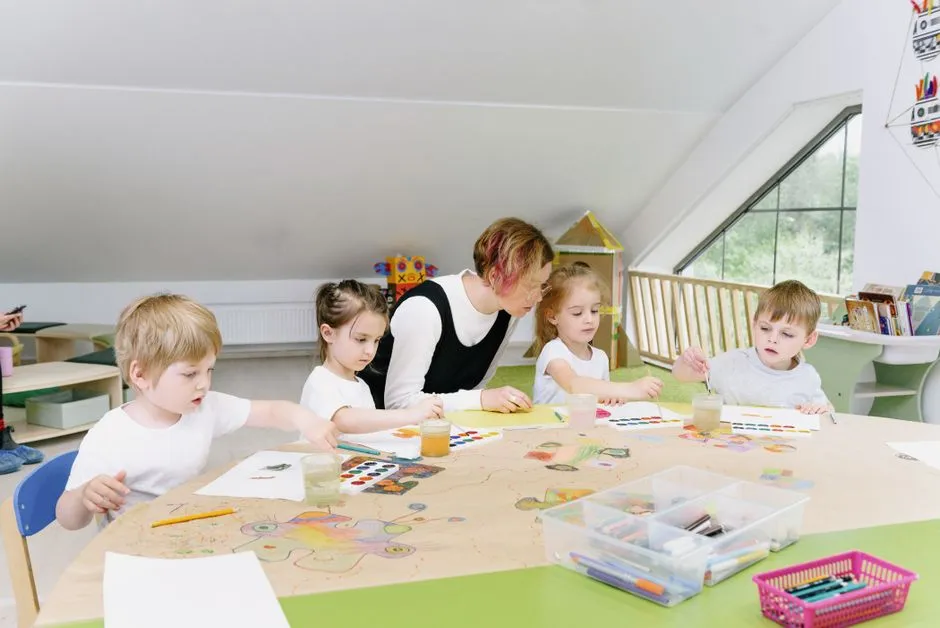
- Morning warm-up. Hand out a themed page as students arrive. It calms the room and frees you up for attendance and check-ins.
- Vocabulary anchors. Pair each page with two or three target words and have students label parts of the drawing as they color.
- Differentiated centers. Use the “simple” pages with younger or struggling students and the “detailed” pages as enrichment for early finishers — same theme, different challenge.
- Substitute folder. Print one of every category and keep a stack in a sub folder. Pure gold on a chaotic Monday.
- Parent-night displays. Color a class set, post them on a hallway wall, and you’ve got a free open-house exhibit in 20 minutes.
Ideas for home
- Restaurant kits. Slip three pages and a tin of crayons in your bag. Suddenly any restaurant has a kids’ menu.
- Travel binders. Print 10–15 pages, add a couple of mazes from the alphabet category, and you’ve solved most of a long flight.
- Birthday party favor. A small folded coloring booklet with five themed pages and a six-pack of crayons costs almost nothing and beats plastic trinkets every time.
- Quiet-time anchor. Pair a coloring page with a 25-minute timer for a screen-free wind-down before dinner or bedtime.
Big-feelings tool
For toddlers and preschoolers especially, sitting down to color is a remarkably reliable way to defuse a meltdown-in-progress. The act of choosing a color, gripping a crayon, and filling a small shape engages enough of the brain to interrupt the spiral. Keep a small folder of favorite pages near the kitchen table for exactly these moments.
Accessibility
Many of our categories include high-contrast, thick-line designs that are easier for children with low vision or limited motor control. Look for the Difficulty: Simple tag and pages with large fillable shapes — these are also great for very young children and for adults coloring alongside kids.