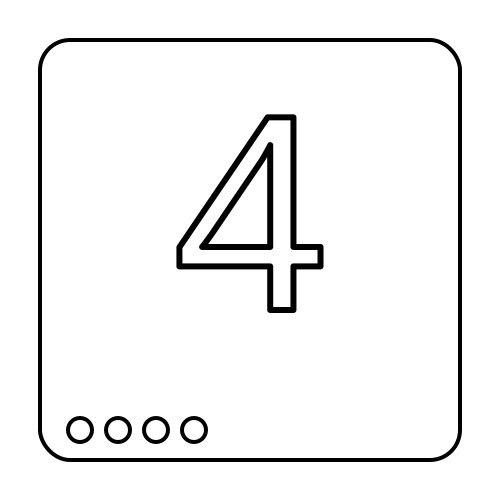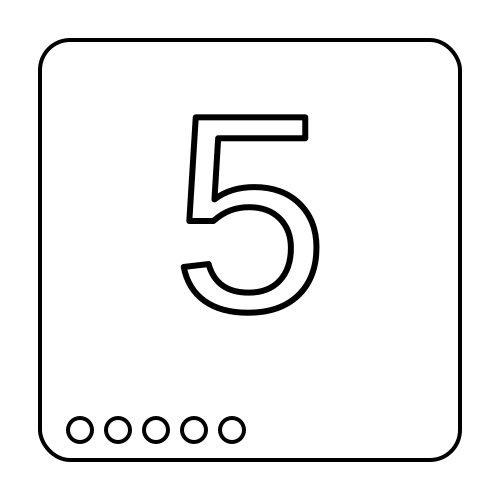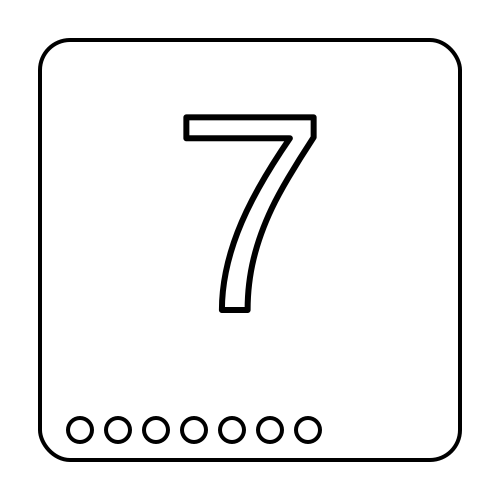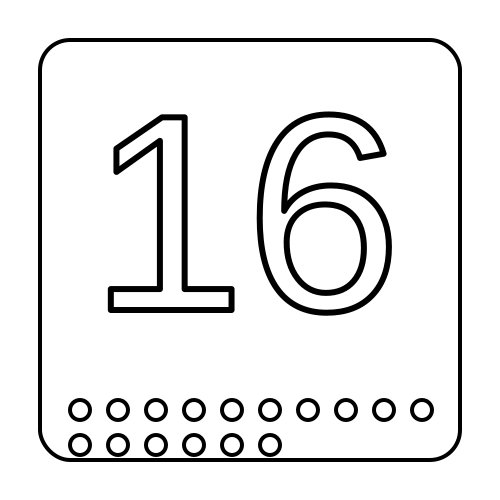
About this coloring page
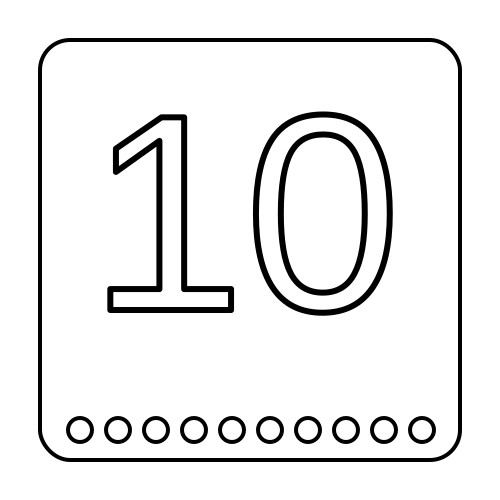
This Number 10 coloring page lives in the sweet spot between “too plain” and “too busy.” Bold outlines define the major areas while small interior details give older kids something to focus on once the easy spots are filled. We’ve printed our test copies on everything from cheap copy paper to thick cardstock and the design holds up across all of them — even if your home printer is running low on toner, the outlines stay crisp enough to color cleanly.
Pair the page with a basic 24-pack of crayons, or get fancy with watercolor pencils for a softer look. Markers work well too — the heavier outlines help contain the color so accidental over-coloring is less catastrophic than usual. If you have access to gel pens, those work especially well for the smaller interior details, and a metallic gold or silver gel pen used sparingly gives any finished page that “framed and hung in the hallway” level of polish without much extra effort.
Many of our educational pages get used as conversation prompts as much as art projects. A Number 10 is a small invitation to talk — about colors, about the subject, about a story your child wants to invent on the spot. We’ve added a few open-ended questions further down the page that you can use as conversation starters while your child is working, no special prep required.
Once it’s done, hang it on the fridge, mail it to a grandparent, or stack it in a binder of finished art. Coloring time is one of the few low-stakes ways small kids get to make creative decisions on their own — celebrating the result, even quietly, makes the next page that much more inviting. We try to keep at least three or four finished pages visible somewhere in the house at all times, and we rotate them weekly so nobody’s art ever feels old.
Coloring tips
- Save a sticker sheet for the end — three or four well-placed stickers turn a finished page into a card or gift tag.
- Add a tiny pattern (dots, stripes, stars) inside one big area for visual interest without adding any drawing skill.
- Use the side of a peeled crayon for big areas and the tip for small details — same crayon, two different looks.
- Tape the page to a window after coloring with markers; the light coming through gives a stained-glass effect kids love.
- If your child is younger than five, tear the sheet in half and let them work on one piece at a time so the page feels finishable.
- Color the background first with a light wash so the Number 10 stands out.
Want printable-friendly paper recommendations? See our quick guide to crayons, markers and printer paper →
Conversation starters
Coloring time is a great moment to talk. Try these prompts while your child is working on their number 10 page:
- Pick the part of the page you like best — what makes that part the best?
- Where does this Number 10 live? In a forest, a city, a kitchen, somewhere else?
- If you could give it a name, what would it be?
- What would happen next if this picture was the cover of a story?
- If this Number 10 could talk, what is the first thing it would say?
Learn a little more
Most educational-themed pages on Kid Pages Fun pull from the wider world of public-domain illustration, then get redrawn with thicker outlines and simpler shapes so they print cleanly and color easily. The Number 10 design is a friendly, kid-readable take on the subject — perfect as a jumping-off point for a quick conversation, a related picture book at the library, or a short field trip if the season is right. Pair it with one or two other Numbers 0–20 pages from this site for a longer activity, or use it as a single five-minute warm-up before moving on to something else.