About this coloring page
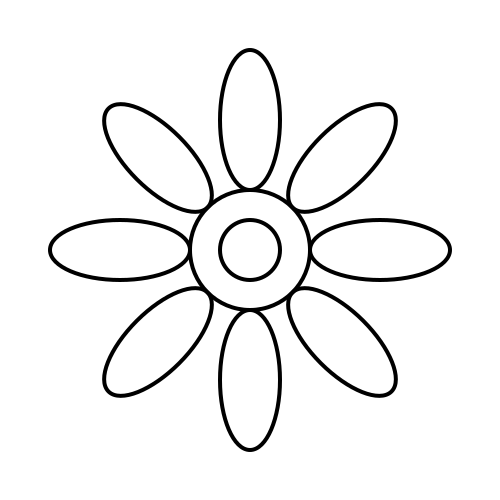
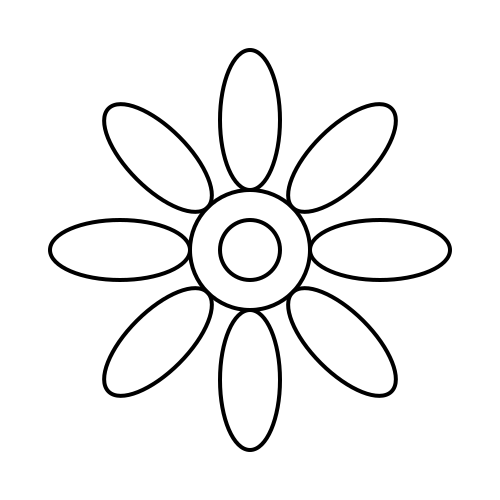
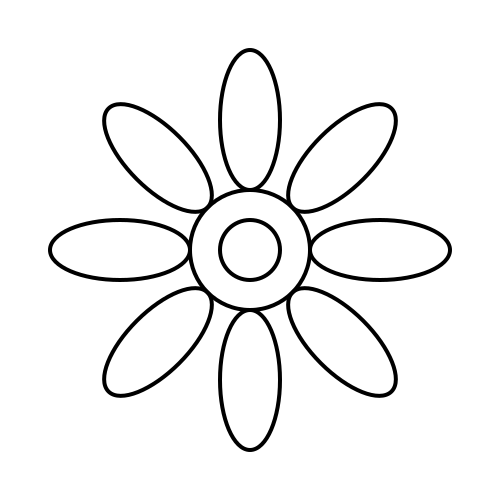
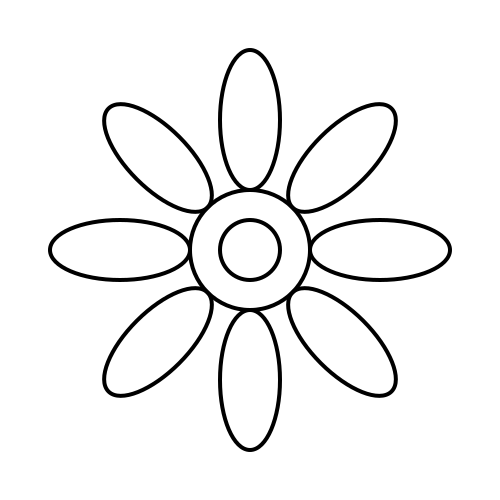
If your kid loves nature & seasons, this Sunny Flower page is an easy win. The lines are thick enough to fill in confidently with a chunky crayon, and the negative space is varied — some big sweeping areas for younger artists, some smaller pockets that reward a more careful hand. We drew it specifically with the 4 – 12 crowd in mind, so nothing is so fiddly that a preschooler will give up halfway through, and nothing is so empty that a second-grader will lose interest.
The design works in a single black-and-white pass on any home or classroom printer. If you want to save toner, use draft mode — the outlines are thick enough to survive economy printing without losing definition. Younger kids tend to do best when you tear or cut the page along the bottom edge so the sheet is square and easier to rotate. Older kids will happily work on the full landscape sheet, and a few will even ask for two copies so they can try a different color scheme on each.
Many of our educational pages get used as conversation prompts as much as art projects. A Sunny Flower is a small invitation to talk — about colors, about the subject, about a story your child wants to invent on the spot. We’ve added a few open-ended questions further down the page that you can use as conversation starters while your child is working, no special prep required.
Coloring this kind of page is a remarkably good wind-down activity before dinner or bedtime. The repetitive motion is calming, the focus is gentle, and the finished result gives kids a small sense of accomplishment to carry into the next part of their day. We’ve found that even reluctant readers will sit through a chapter of a bedtime book if they have a Sunny Flower page in their lap and a quiet pile of crayons next to them.
Coloring tips
- Save a sticker sheet for the end — three or four well-placed stickers turn a finished page into a card or gift tag.
- Tape the page to a window after coloring with markers; the light coming through gives a stained-glass effect kids love.
- If your child is younger than five, tear the sheet in half and let them work on one piece at a time so the page feels finishable.
- Outline each section in marker before filling with crayon for a stained-glass effect.
- Try one color family per area — warm colors (red, orange, yellow) for a sunny mood, cool colors (blue, green, purple) for a calm one.
- Layer two crayon colors on top of each other to invent a new shade; reds and yellows make a particularly good nature & seasons-themed orange.
Want printable-friendly paper recommendations? See our quick guide to crayons, markers and printer paper →
Conversation starters
Coloring time is a great moment to talk. Try these prompts while your child is working on their sunny flower page:
- What three colors did you choose, and why those three?
- If you drew the next page in the story, what would be on it?
- What would happen next if this picture was the cover of a story?
- What would change about this Sunny Flower if it were nighttime instead of daytime?
- Where does this Sunny Flower live? In a forest, a city, a kitchen, somewhere else?
Learn a little more
Most educational-themed pages on Kid Pages Fun pull from the wider world of public-domain illustration, then get redrawn with thicker outlines and simpler shapes so they print cleanly and color easily. The Sunny Flower design is a friendly, kid-readable take on the subject — perfect as a jumping-off point for a quick conversation, a related picture book at the library, or a short field trip if the season is right. Pair it with one or two other Nature & Seasons pages from this site for a longer activity, or use it as a single five-minute warm-up before moving on to something else.