About this coloring page
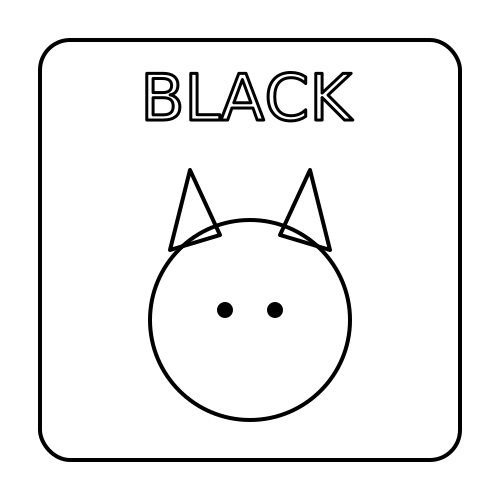
This Black Cat coloring page lives in the sweet spot between “too plain” and “too busy.” Bold outlines define the major areas while small interior details give older kids something to focus on once the easy spots are filled. We’ve printed our test copies on everything from cheap copy paper to thick cardstock and the design holds up across all of them — even if your home printer is running low on toner, the outlines stay crisp enough to color cleanly.
Pair the page with a basic 24-pack of crayons, or get fancy with watercolor pencils for a softer look. Markers work well too — the heavier outlines help contain the color so accidental over-coloring is less catastrophic than usual. If you have access to gel pens, those work especially well for the smaller interior details, and a metallic gold or silver gel pen used sparingly gives any finished page that “framed and hung in the hallway” level of polish without much extra effort.
This page fits naturally into preschool color recognition, ELL practice, kindergarten centers. Parents tell us they keep a small folder of printed sheets in the car for restaurant waits and waiting rooms; teachers stash them in their sub-plans folder for the days a lesson runs short. The Black Cat design works in either context because it doesn’t require any setup conversation — kids see it, recognize it, and start coloring without needing the activity explained.
If your child finishes quickly and wants more, jump to one of the related pages at the bottom — they share a theme but vary the difficulty so you can keep the activity fresh for another twenty minutes. The whole Colors collection is designed to be browsed this way, with each page leading naturally into another, and the related links at the bottom of every page make it easy to keep the momentum going without you having to hunt for the next thing.
Coloring tips
- Save a sticker sheet for the end — three or four well-placed stickers turn a finished page into a card or gift tag.
- Tape the page to a window after coloring with markers; the light coming through gives a stained-glass effect kids love.
- Try one color family per area — warm colors (red, orange, yellow) for a sunny mood, cool colors (blue, green, purple) for a calm one.
- Use the side of a peeled crayon for big areas and the tip for small details — same crayon, two different looks.
- Print two copies and let your child try a realistic version on one and a totally invented color scheme on the other.
- Layer two crayon colors on top of each other to invent a new shade; reds and yellows make a particularly good colors-themed orange.
Want printable-friendly paper recommendations? See our quick guide to crayons, markers and printer paper →
Conversation starters
Coloring time is a great moment to talk. Try these prompts while your child is working on their black cat page:
- What would happen next if this picture was the cover of a story?
- What three colors did you choose, and why those three?
- What would change about this Black Cat if it were nighttime instead of daytime?
- Pick the part of the page you like best — what makes that part the best?
- If this Black Cat could talk, what is the first thing it would say?
Learn a little more
Most educational-themed pages on Kid Pages Fun pull from the wider world of public-domain illustration, then get redrawn with thicker outlines and simpler shapes so they print cleanly and color easily. The Black Cat design is a friendly, kid-readable take on the subject — perfect as a jumping-off point for a quick conversation, a related picture book at the library, or a short field trip if the season is right. Pair it with one or two other Colors pages from this site for a longer activity, or use it as a single five-minute warm-up before moving on to something else.