About this coloring page
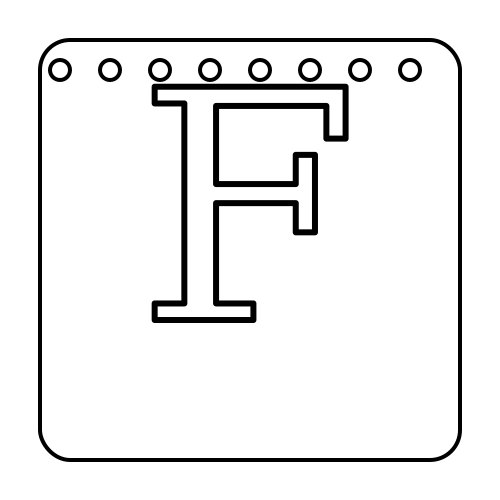
We chose this Letter F design because it strikes a balance most alphabet a–z pages miss: detailed enough to feel like a real picture, simple enough that a four-year-old can finish it before the timer runs out and ask for another. The composition is centered with generous margins, which means the page looks great even when a younger artist colors well outside the lines, and the major shapes are big enough to fill in confidently with a single crayon stroke.
Print on standard letter or A4 paper. We recommend 28 lb “multipurpose” paper if you have it — markers bleed less and colored pencils layer more smoothly than on basic copier stock. The SVG is vector, so feel free to scale it up to poster size for a classroom mural without losing any sharpness. A common trick teachers use is to print one page at 200% on tabloid paper and let a small group color it together as a cooperative project; it turns a five-minute activity into a thirty-minute one.
This page fits naturally into preschool letter-of-the-week, kindergarten centers, ABC books. Parents tell us they keep a small folder of printed sheets in the car for restaurant waits and waiting rooms; teachers stash them in their sub-plans folder for the days a lesson runs short. The Letter F design works in either context because it doesn’t require any setup conversation — kids see it, recognize it, and start coloring without needing the activity explained.
Once it’s done, hang it on the fridge, mail it to a grandparent, or stack it in a binder of finished art. Coloring time is one of the few low-stakes ways small kids get to make creative decisions on their own — celebrating the result, even quietly, makes the next page that much more inviting. We try to keep at least three or four finished pages visible somewhere in the house at all times, and we rotate them weekly so nobody’s art ever feels old.
Coloring tips
- Outline each section in marker before filling with crayon for a stained-glass effect.
- Try one color family per area — warm colors (red, orange, yellow) for a sunny mood, cool colors (blue, green, purple) for a calm one.
- Use the side of a peeled crayon for big areas and the tip for small details — same crayon, two different looks.
- If your child is younger than five, tear the sheet in half and let them work on one piece at a time so the page feels finishable.
- Color the background first with a light wash so the Letter F stands out.
- Print two copies and let your child try a realistic version on one and a totally invented color scheme on the other.
Want printable-friendly paper recommendations? See our quick guide to crayons, markers and printer paper →
Conversation starters
Coloring time is a great moment to talk. Try these prompts while your child is working on their letter f page:
- If you drew the next page in the story, what would be on it?
- Pick the part of the page you like best — what makes that part the best?
- What would change about this Letter F if it were nighttime instead of daytime?
- Where does this Letter F live? In a forest, a city, a kitchen, somewhere else?
- What sound does it make? Show me with your face.
Learn a little more
Most educational-themed pages on Kid Pages Fun pull from the wider world of public-domain illustration, then get redrawn with thicker outlines and simpler shapes so they print cleanly and color easily. The Letter F design is a friendly, kid-readable take on the subject — perfect as a jumping-off point for a quick conversation, a related picture book at the library, or a short field trip if the season is right. Pair it with one or two other Alphabet A–Z pages from this site for a longer activity, or use it as a single five-minute warm-up before moving on to something else.